Do you love nature and want…
- More pollinators?
- More wildlife?
- More beauty?
- Less uncertainty?
- Less overwhelm?
- More FUN?
Then you’re in the right place!
We’re here to help you learn about the native plants, pollinators, wildlife, and other nature found in the eastern U.S. and to teach you how to create beautiful, thriving ecosystems where you live, work, and play.
Welcome to Backyard Ecology
Because nature isn’t just “out there.” It’s all around us, including right outside our doors.
Join us as we ignite our curiosity and natural wonder, explore our yards and communities, and improve our local ecosystems.
Why should I care about improving my local ecosystems or learning about the nature around me?
As lifelong nature enthusiasts and nature nerds, we have to admit that our first reaction to this question will always be, “because nature is fun and interesting!” But there’s also a much more practical reason.
More and more research is showing that spending time in nature is extremely beneficial to our mental, physical, and emotional health. Research shows that spending time in nature can:
- lower blood pressure and heart rate,
- reduce stress and anxiety,
- improve concentration and attention,
- increase creative thinking and problem-solving,
- boost the immune system,
- and a whole host of other things.
And what better way to experience all those healthy benefits of spending time in nature than to encourage nature to thrive in the places where we’re already going every day?
We’re all busy. Who has time to go somewhere else to spend time in nature on a daily basis? Let’s make our lives easy and create thriving ecosystems where we live, work, and play so that we don’t have to go anywhere or do anything else. That way spending time in nature just becomes a natural part of our lives.
What if I don’t have a backyard? Or what if I want to do this someplace else?
No problem! The “backyard” in Backyard Ecology doesn’t just refer to the physical space behind your house. Instead, we’re using the broader concept of “backyard” to encompass all those familiar places where you live, work, and play.
So, for our purposes your “backyard” includes:
- your property,
- your kids’ school,
- where you work,
- the local park or campground,
- your place of worship,
- and anywhere else you spend a significant amount of time.
And let’s face it. In some cases, you may spend as much time in some of those “other” places where you live, work, and play, than you do in the space behind your house.
As long as long as you’re in the eastern U.S. we’re here to help you learn about your local nature and how special it is. Then, when you’re ready to take the next step, we’ll teach you how to confidently create a beautiful, easy-to-care for ecosystem that supports an abundance of birds, butterflies, bees, fireflies, and other critters based on your unique goals, interests, and the property you are working on. (Obviously, make sure you have the appropriate permissions before doing anything if you don’t own the property where you are working.)
Who is Backyard Ecology for?
We created Backyard Ecology for busy people in the eastern U.S. who…
- love nature and enjoy learning about the plants, pollinators, and wildlife that can be found in their yards and communities.
- want to go deeper than just attracting pollinators, and instead want to make sure they are supporting the needs of the pollinators they attract.
- are ready to create beautiful, thriving ecosystems where they live, work, and play!
If that sounds like you, then you are exactly who Backyard Ecology is for. It doesn’t matter…
- if you’re just getting started of have been doing this for years,
- if you’re working in your yard, at your local school, in the neighborhood park, at a place of business, or anywhere else,
- if you have 0.1 acres or 100 acres.
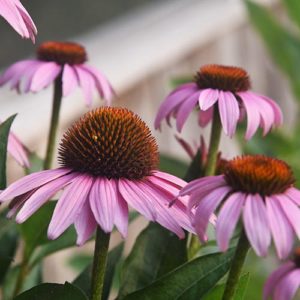
We’ll help you get to know your local native plants, pollinators, and wildlife.
Then, when you’re ready, we’ll teach you how to confidently create beautiful thriving ecosystems while having fun and without feeling overwhelmed or unsure what to do.
Which path will your ecological journey with us take?
You have a unique ecological journey and your needs may not be the same as someone else’s. That’s why we offer a wide variety of content and services that includes everything from free resources to in-depth, customized, on-going support. The chart below will help you find the right path for you.
Solo
Best for you if…
- You enjoy figuring everything out on your own.
- You’re primarily just gathering information.
- You’re ok with generic information that is meant for a broad audience so may not apply specifically to your situation.
Backyard Ecology resources to help you:
Guided
Best for you if…
- You recognize the value of having experienced experts available to teach you and answer your questions as they come up.
- You’re ready to take action and apply what you’re learning to go beyond just gardening and create a thriving ecosystem instead – even if this is your first time doing it.
- You’ve tried figuring it out on your own and ended up feeling discouraged and overwhelmed.
- You want help that is customized to your unique property, goals, and available time, money, or other resources.
Backyard Ecology resources to help you:
See what some of our fans have to say about Backyard Ecology and how we’ve helped them…
“I enjoy learning more about ecosystems, gardening, and plants from experts, who can offer insights into “why” and “how” things work, instead of just saying “It works, do it.“
~ Alex
“Backyard Ecology has taught me so much about not only native plants but also the benefits of creating an ecological landscape.
I like that the content is down to earth and is not too scientific.
It also understands that some people are just starting out and encourages them.“
~ Becky
“This is the answer that I’ve been looking for!
For a year I have been trying to figure out a way to create a wetland habitat on my 3/4 acre (woods adjacent property) in Louisville and just couldn’t get my mind out of pond mode.
When I heard no pumps, no cascading water feature, no stone border, etc., the sky opened up. And when I heard no mosquitos, and low maintenance I was sold.“
~ Tim
“This channel has been a wonderful source of encouragement and inspiration for us as we continue to clear invasives from our yard and learn to listen to what our tiny little scrap of land would like to be when it grows up.
Many thanks to both Anthony and Shannon for their tireless hard work. Happy and honored to continue supporting the channel. You are truly a ray of hope.“
~ piaonomata9220
“Thank you guys for all of the wonderful content and advice that you guys “assemble” and share!
I can only imagine that it involves a tremendous amount of work to create such content, and you guys are heroes in my humble book!
I have learned so much from your great videos and newsletter! (please count me as a huge fan!)“
~ Travis
“The material goes beyond the normal gardening for natives tips that get regurgitated everywhere.
Your work ties back to ecological health and that is what is important, not just having pretty flowers that save butterflies.“
~ Anonymous
Frequently Asked Questions
Below are the answers to some of the questions that we are most often asked. Can’t find the answer to your question here? Ask us.
About Your Ecological Journey
Great question! Unfortunately, there isn’t one standard answer that everyone uses, which causes a lot of confusion especially for those just getting started with native plants. That’s why we encourage you to always ask this of anyone who you are talking to about native plants. Otherwise you may be working off two different definitions, which often leads to growing plants that wouldn’t naturally occur in that location.
We define a native plant as a plant which is naturally found in a region and has developed complex ecological relationships with the other organisms found there. Now, the big question is how do we define “region.”
In the context of our videos, podcasts, and blogs, we are generally defining “region” as the eastern U.S. / Eastern Temperate Forest ecoregion with the caveat that the species may not be native to everywhere in that large of a region. When you are talking to the masses, that’s kind of the way you have to do it. (That’s why we always try to show maps indicating which parts of the larger region those plants are actually native to.)
When we’re talking to individuals, we typically define region by state or ecoregion (Level III or IV). Ecoregions are best, but let’s face it, most of us don’t know our ecoregions. We’re much more familiar with geopolitical boundaries like states and counties. So, we keep it simple and will often use those in our discussions.
It’s easy to approach creating a native plant garden, a pollinator planting, or similar project around our homes in the same way that we would any other garden or landscaping project.
When that happens, the focus is usually on picking plants that “look pretty” and will grow well in the space we want to put them. Nothing else really comes into consideration, except for the idea that native plants in general are good for pollinators and wildlife.
We also tend to manage and maintain the project in the same way that we would any other garden or landscaping project. Again, with the sole considerations usually being:
- does it “look pretty?”
- does it fit in with the neighborhood or community standards?
- does it do what I want it to do?
In other words, the unspoken emphasis is more on “does this work for me?” than “does what I’m creating work equally well for the critters and for me?”
So, let’s imagine someone creates a pollinator garden or native plant garden by growing lots of native plants which attract adult butterflies and even serve as host plants for some of their caterpillars. But then that person does a traditional fall cleanup that removes all the leaves and dead vegetation.
Unfortunately, they’ve just thrown away any overwintering eggs, caterpillars, or chrysalises that are attached to that vegetation and leaves. Not to mention the eggs, larva, and pupa of other types of insects that might be on or in the discarded vegetation and leaves. And I think we can all agree that getting rid of or killing all the babies isn’t a good thing.
So, despite their best intentions, that person may have just done more harm than good by creating what’s called an ecological trap. (An ecological trap is a location that looks good to an animal but then turns out to be detrimental once the animal has committed to that spot and can’t leave.)
When you create a thriving ecosystem, you’re making sure that the pollinators you attract have everything they need (food, water, and shelter) throughout their life cycles. That includes both the plants you grow and the way you manage those plants. In other words, you transition from just attracting pollinators to really supporting pollinators.
You’re also not putting blinders on and focusing on only one species (or group of species) at the expense of others. A thriving ecosystem is full of an abundance of critters, including predators. And that’s ok, because it’s balanced and the predators have predators…
Also, don’t worry. Thriving ecosystems can be beautiful.
But the emphasis is on “Does this meet the needs of the pollinators (or other animals) I want to support?” “Does it look pretty?” is a secondary consideration for creating ecosystems. (But there’s almost always a way to make your ecosystem look pretty too because there are usually multiple ways to achieve the same goals – see my “it depends” article. That’s why we say that you don’t have to choose between creating a thriving ecosystem and having a beautiful yard or other green space.)
Because you’re unique!
No one else has your exact combination of:
- knowledge
- skills
- available time and energy
- available funds
- family situation
- aesthetic preferences
- interests
- goals
- access to other resources
Because your location is unique!
No two properties are ever exactly the same. They may have different:
- climates
- sizes
- plants that are growing or have grown there
- soil types
- land uses
- amounts and types of soil disturbance
- management histories
- proximity to parks or other “wilder” areas
Because your neighborhood is unique!
No two neighborhoods are the same. They may have different:
- formal community or HOA restrictions
- informal neighborhood styles or standards
- number of other homeowners or businesses doing similar things
- number of people who view mowing as a hobby
- amount of trees and other types of green space built into the neighborhood
- proximity to creeks, streams, ponds, lakes, or other sources of water
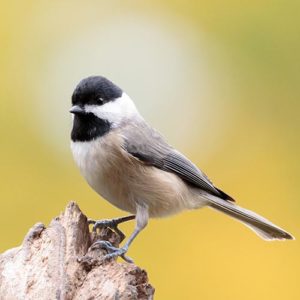
Yes, we offer on-site consulting if you would like us to:
- walk your property and identify the plants you have naturally growing there, as well as any animals that we see while we are there,
- create customized educational materials for you about your native plants, pollinators, and wildlife, or your local ecosystem,
- develop a detailed, customized plan for you to follow as you create your own thriving ecosystem.
Our consulting page has all the details about our consulting services and how to start the process.
However, even if you’re just getting started, an on-site consultation may not be the best option for you. If you’re working in a smaller space or have a small budget, the Backyard Ecology Community may be a better choice for you.
Through the Backyard Ecology Community we provide ongoing, personalized, coaching, and support within a virtual setting. The lack of travel expenses and group nature of the Community also make it a much more economical option. Unless you live within a county or two of us – you’ll likely be able to get a year of support in the community for less than the cost of an on-site consultation.
The two options aren’t mutually exclusive either. An on-site consultation could help jumpstart your project and then the coaching within the Community could provide you with the ongoing guidance and support you need for the long-haul.
The chart below provides some of the pros and cons of each option. If you’re still not sure which is the right choice for you, contact us and we’ll help you figure it out. We want you to get the help you need and we’re not going to try to talk you into something that we don’t think is right for you.
On-site consultation vs virtual coaching
Which is right for you?
On-site Consulting
Pros
- On-the-ground professional identifications and insights: You get a professional’s eyes and brain right there, where they can see everything on your property. They may see things you don’t.
- Less initial time and thought investment to design your ecosystem: Just do what they tell you and follow their plan.
- Familiar communication method: Talking face-to-face is easy – we’ve been doing that for practically our entire lives.
Cons
- Accessibility: It may be hard to find a qualified consultant.
- Expense: Travel costs add up quickly, especially if the consultant isn’t local.
- Limited access to expertise: Consultant takes knowledge and skills with them when the project is done.
Virtual Coaching
Pros
- Save money: You can often get several months or even a year’s worth of virtual coaching for the price of one on-site consultation.
- More accessible: You aren’t limited to choosing between paying travel expenses and finding someone who is local to where you live.
- Ongoing support: You can get help with questions and unexpected challenges as they come up.
- Builds confidence: You are empowered to do your own ecosystem creation and maintenance.
- Expertise is yours to keep: The knowledge and skills you gain can be applied, not just to the immediate project, but also to additional projects you want to do in the future.
Cons
- You get out of the program what you put into it: Requires more time and thought from you on the front end because you aren’t handed a readymade plan to follow.
- You don’t know what you don’t know: You may not see everything that a consultant sees, or even if you see it, you might not recognize that it’s important. (Although we try to help you identify those things.)
- Technology: You don’t have to be a tech guru, but you do need to be comfortable using basic technology such as message boards and Zoom to communicate. (We’re willing to help you learn.)
About Backyard Ecology
Our content focuses on the eastern U.S., or more specifically the Eastern Temperate Forest, Level I ecoregion as indicated on the map below.
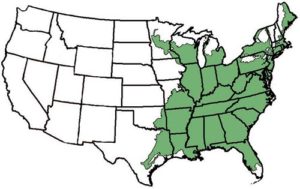
Because different parts of the country (and world) include different ecosystems with different:
- native plants and animals,
- climates,
- soils,
- challenges when it comes to creating, managing, and maintaining habitat.
Plus, what is native in one part of the country / world, may be invasive somewhere else.
We focus on the eastern U.S. because this is where we live. These are the plants, animals, climates, soils, etc. that we know, understand, and have firsthand experience with.
Even within the eastern U.S., there’s a lot of variation but there are more similarities within the eastern U.S. than between say Kentucky and Colorado or California. The fact that most of the eastern U.S. is in the same Level I ecoregion illustrates that fact.
Yeah, we could research the ecosystems that are found in other parts of the country and make content talking about the plants and critters that live there, but it would lose the firsthand, real life, been-there-done that experience. At that point, how would what we share be different from what you can get from Googling a subject or asking AI?
We want to go deeper with you and serve you in the best way we can. That means focusing on the ecosystems and regions that we know. It also means letting someone else serve other parts of the country / world – hopefully someone who is as familiar with their region as we are with ours. We believe this will provide everyone with the most valuable and helpful content possible.
Unfortunately, no, we don’t. If you find someone, please let us know so that we can share that information with others who ask us this question.
We use the term “backyard” very loosely. In the context of Backyard Ecology, we’re referring to the broader concept of your backyard which includes all those familiar areas where you live, work, and play. And, yes, the same principles apply.
So, for our purposes your “backyard” includes:
- your property,
- your kids’ school,
- where you work,
- the local park or campground,
- your place of worship,
- and anywhere else you spend a significant amount of time.
Also, if you’re a homeowner who is working on your own property, then backyards tend to be a little more informal. And we thought that if you’re just starting out then the backyard might be a little less intimidating. So, we start in the backyard and then expand out to take over the world 😉. Ok, maybe not… but am I the only one thinking about Pinky and the Brain now?
Yes! We enjoy providing virtual presentations, in-person presentations, workshop-style trainings, keynotes for conferences, and being podcast or other media guests. Please see our speaker page if you’re interested in having us present at an upcoming event or inviting us to be a podcast or other media guest.
Meet the Backyard Ecology team
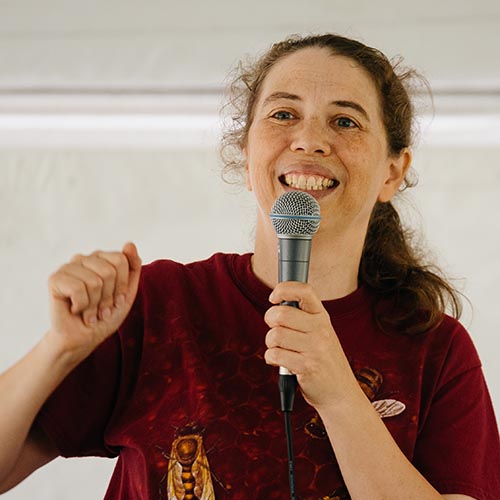
Shannon Trimboli
Founder, Co-host
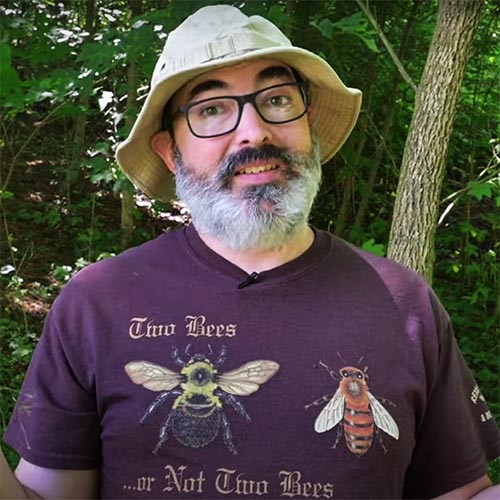
Anthony Trimboli
Co-host
We are Shannon and Anthony Trimboli. We live in southcentral Kentucky and are life-long nature lovers. Shannon has an M.S. in Ecology and a B.S. in Wildlife Biology. Anthony has an M.S. in Agriculture and a B.S. in Wildlife Biology.
We are passionate about sharing our love of nature with others. We enjoy inspiring people to form their own connections with nature and then take action to create their own thriving ecosystems where they live, work, and play.
We are also actively working on and managing our property to attract pollinators and wildlife. So, we understand all the excitement, challenges, frustrations, and celebrations that come with trying to create functioning ecosystems where you live because we’re experiencing the same things. (We’ve also made our fair share of mistakes and want to help you avoid making the same ones.)
Backyard Ecology’s Guiding Principles:
🦋 Curiosity: Nature is fun, interesting, and worth exploring. We will never know everything. Answers lead to more questions. That’s half the fun.
🦋 Balanced: You don’t have to choose. You can support nature AND have a beautiful property that you can enjoy.
🦋 Science informed: Habitat creation and management should be based on the latest scientific research available. This is true regardless of whether you’re working in a small garden or on hundreds of acres.
🦋 Stewardship: Your property can provide valuable habitat for pollinators and wildlife.
Thank you!
These amazing individuals go above and beyond every month to provide financial support which helps us create so much free content for everyone to enjoy and learn from.
Julie Krygier, Lizabeth, Russel Furnari, Ubiquisquish, Karen Veleta, Kevin B, Crystal Dyamonds, Mitchell Bell, Sue Ann Barnes, Adrienne Richardson, Ariel, Cara Flinn, Cathy, Michael, Tom Winner, Julie, SB H, Craig, Rachel Antonucci, Melissa Egbertson, Switzy, Vilma Fabre, Pia O Nomata, Patrick Dwyer, Paul Gourley, John Master, Debra, Ayn Zitzman, Debra Moore, Han Mad, Isaac Kowis, Cathy Anderson, Betsy Lessels, Reid, Dave Teare, I’m Trying for Good, Jeff, Richard, Chris Peterman, Ann Farrer, Carol, Hunter Strickland, Tyler Dowdy, Gabriel Madison, JCS, Birderswithdogs, Michael Larkin, K Firth, Irene Lofstrom, Vegan Street, Shannon C., Laura Clark, Ashley Oliver, and Liston Smith.